
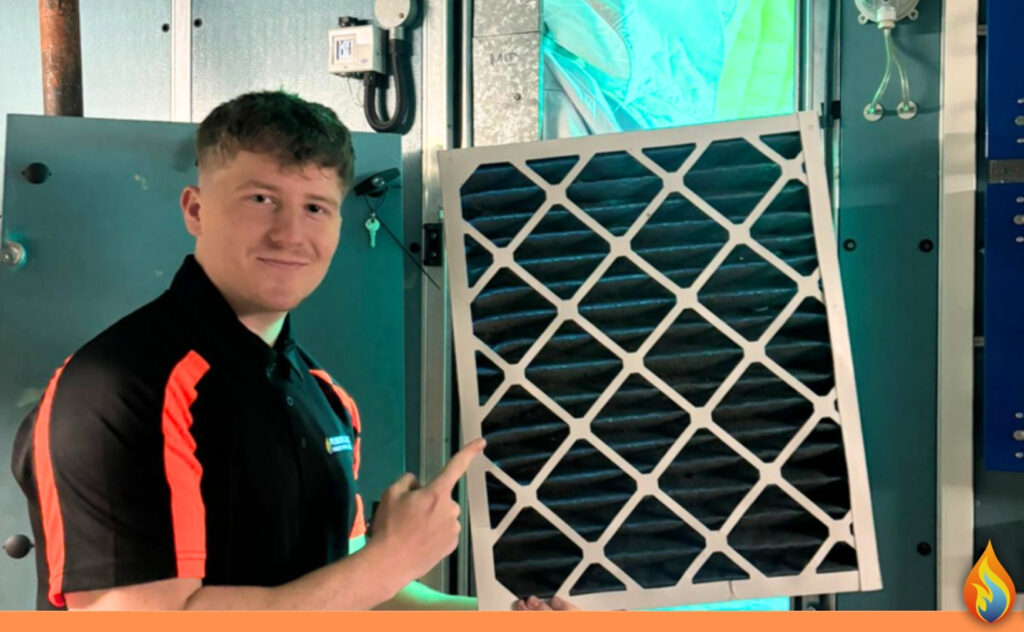
Air handling unit (AHU) filters are one of the simplest parts of a building’s ventilation system to look after, and one of the easiest to forget.
An air handling unit is the large box, usually in a plant room or on the roof, that draws in air, filters it, heats or cools it and moves it around the building through ductwork. Its filters trap dust, pollen and other particles before they reach the rooms and the equipment inside the unit.
As filters fill up, the unit keeps running, so nothing obviously fails. Instead, rooms can start to feel stuffy, heating and cooling take longer to bring spaces up to temperature, and energy use creeps up. On an illustrative 3 kW unit, a clogged filter left in place all year could add around £560 to running costs, as the worked example below shows.
So how often should air handling unit filter replacement happen? There is no single answer. It depends on the filter, the building and how hard the system has been working. This guide is for facilities managers, office managers and business owners arranging maintenance. It explains how to judge when filters need replacing, what clogged filters can cost, and how we approach filter maintenance on the sites we look after across Milton Keynes.
Why dirty AHU filters are a hidden cost
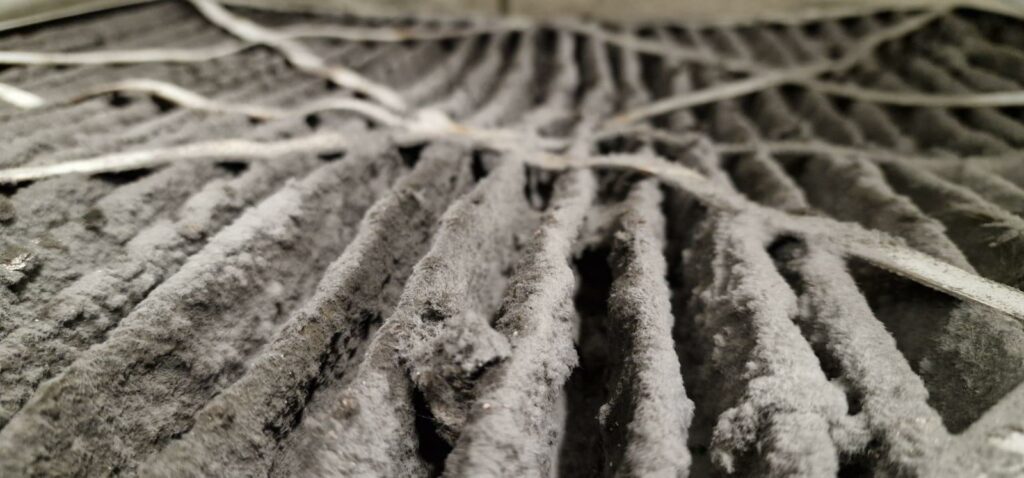
AHU filters rarely announce themselves. What tends to get noticed are the knock-on effects:
- Rooms feeling stuffy by mid-afternoon.
- Energy costs creeping up.
- Heating or cooling that struggles to keep up.
- Extra strain on the fan and the parts that drive it.
By the time these show, the filters have usually been past their best for a while. Filter checks are also easy to put off when budgets are tight, which is why they are often the first task to slip.
How a clogged filter affects the fan
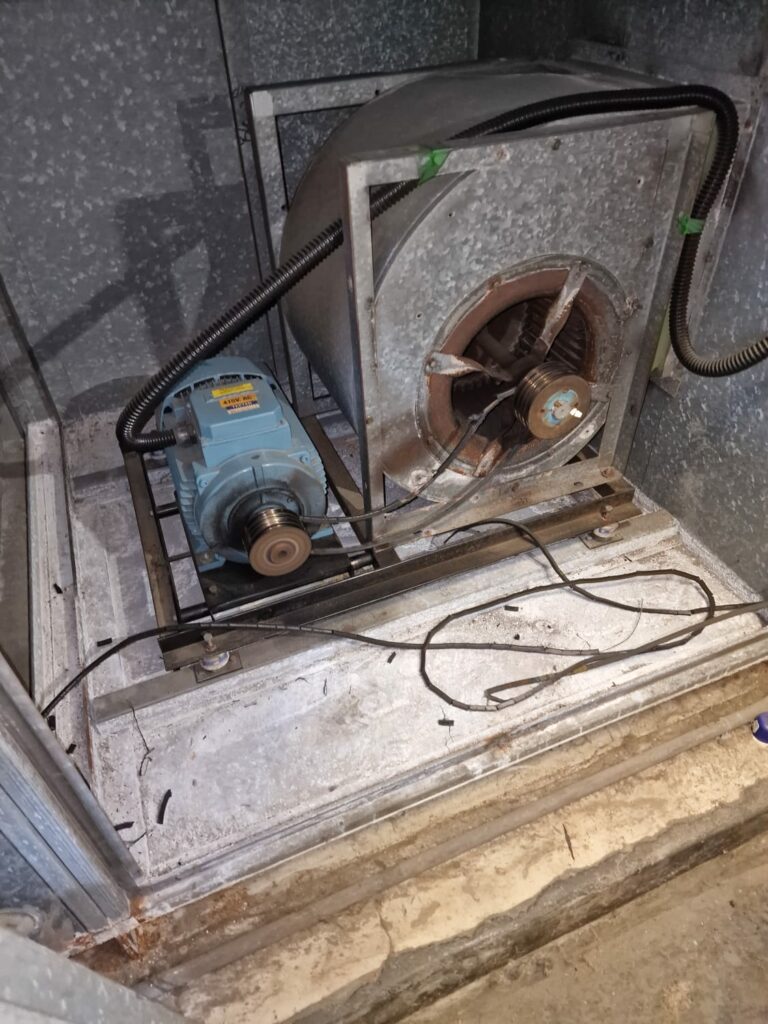
The fan in the unit has to push or pull air through the filters. As a filter fills with dust, it resists the airflow more. Engineers measure this resistance as the pressure drop across the filter: the higher the reading, the harder the fan is working.
What happens next depends on the type of fan. Many modern units have fans that can change speed (often described as EC or inverter-driven fans). These are usually set to deliver a steady amount of air, so as the filter clogs, the fan speeds up to compensate and uses more electricity.
Older units often have fixed-speed fans, which cannot speed up. Instead, less air gets through. Rooms receive less fresh air, heating and cooling work less effectively, and other equipment may run for longer to keep spaces comfortable. You pay either way, just by a different route.
Filter manufacturer Camfil estimates that air filters can account for as much as 30% of the total energy used by an HVAC (heating, ventilation and air conditioning) system. That is an upper-end figure and the real share varies by system, but it shows why filter condition is worth managing as an HVAC energy efficiency issue, not just a maintenance task.
What a clogged filter can cost: a worked example
Using illustrative figures, not measurements from a particular building:
- A fan using 3 kW of electricity, running 3,000 hours a year at an assumed 25p per kWh, costs around £2,250 a year to run.
- Air resistance is measured in pascals (Pa). Say the whole system has a resistance of 600 Pa when the filters are clean, of which the filters account for 100 Pa.
- If the filters clog to 250 Pa, the total rises to 750 Pa, so the fan has to do about 25% more work.
- If the filters stayed at that level all year, that would add roughly £560 a year for that one unit.
In practice, filters clog gradually, so the real cost depends on how long they run dirty, and your own figures will differ. Across several units it adds up, and it is a useful way to show why regular filter checks belong in the maintenance budget.
What happens when dirt gets past the filter
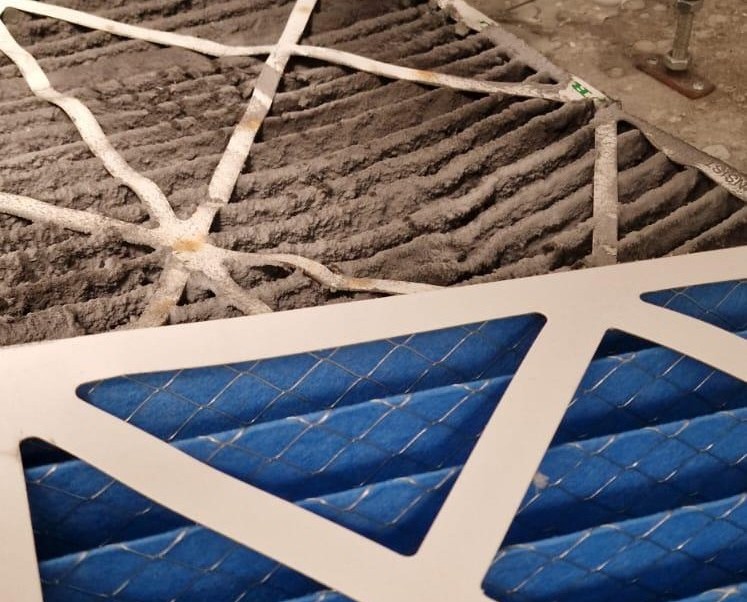
An overloaded filter can bend out of shape in its frame, and a poorly fitted one lets air slip around the edges. Either way, dust reaches the parts behind it: the coils that heat or cool the air, the fan and the ductwork. Cleaning these is a much bigger job than changing a filter, and in most cases an avoidable one.
When air handling unit filter replacement is due: condition, not calendar
There is no single replacement interval that suits every building, which is why AHU filter change intervals should be based on the filter’s condition rather than the calendar alone.
PGS's advice
PGS advises that every environment should be assessed individually. Even two offices that look similar can have different occupancy levels, operating hours and usage, all of which affect how quickly filters need replacing.
For panel filters (the flat filters fitted in many units), a three-month replacement cycle provides an initial guide, but the appropriate interval will depend on the manufacturer’s recommendations, filter type, condition and operating environment. Some filters will need replacing sooner, while others can remain effective for longer.
We also recommend additional checks during or after periods of heavy, prolonged use, including hot summers and cold winters when systems may run for extended hours. Replacement should be brought forward where the filter’s condition indicates it is needed.
How to tell when a filter needs replacing
Legal requirements and maintenance specifications
Many units have a gauge that shows the pressure drop across the filters. Filter manufacturers set a final pressure drop: the highest reading at which the filter should be replaced. On many systems it makes sense to change filters before that point, so it is worth agreeing a change point with your maintenance provider.
Where there is no gauge, an engineer’s visual check and the filter’s age are the main guides. Where practical, we would recommend fitting gauges, as they take much of the guesswork out of future decisions.
Judging by condition avoids two costly habits: throwing away filters that still have life in them, and running clogged filters for months past their best.
No gauge, or no record of the last change? Book a free initial HVAC site evaluation. It is a visual assessment, and where your filters are easy to reach without access equipment, we will inspect them too: the inside of the unit and the condition of the filters tell us a lot about a system’s health.
The Workplace (Health, Safety and Welfare) Regulations 1992 require enclosed workplaces to be ventilated with a sufficient quantity of fresh or purified air (regulation 6), and require mechanical ventilation systems to be maintained in efficient working order (regulation 5).
The regulations do not set a filter replacement interval. They set the outcome: adequate ventilation from a system that is properly maintained.
Maintenance specifications such as SFG20
SFG20 is not a legal requirement. It is an industry maintenance specification that many organisations use to plan maintenance tasks and how often to carry them out, and your maintenance contract may refer to it.
Whichever approach you follow, dated records of filter checks, replacements and gauge readings show that the system is being maintained.
Choosing the right AHU filter grade
Filters are graded under an international standard, ISO 16890, by the size of particles they catch. Coarse filters stop larger dust. Finer grades, labelled ePM10, ePM2.5 and ePM1, catch progressively smaller particles: the numbers refer to particle sizes of 10, 2.5 and 1 micrometre (thousandths of a millimetre), so ePM1 filters trap the finest.
The right grade depends on the space. A general office has different needs from a laboratory, a care setting or a kitchen. Too low a grade lets more dust through; too high a grade adds resistance and energy use without a matching benefit. For filters of the same grade, an energy rating published by the industry body Eurovent (Eurovent 4/21) helps compare running costs.
Step by step: planning your filter checks and replacement
- Find out what you have
List every AHU, the filters fitted and the date of the last recorded check or change. If records are missing, start there. On a multi-site estate, prioritise the units serving the busiest spaces or with the oldest records.
- Check before you order
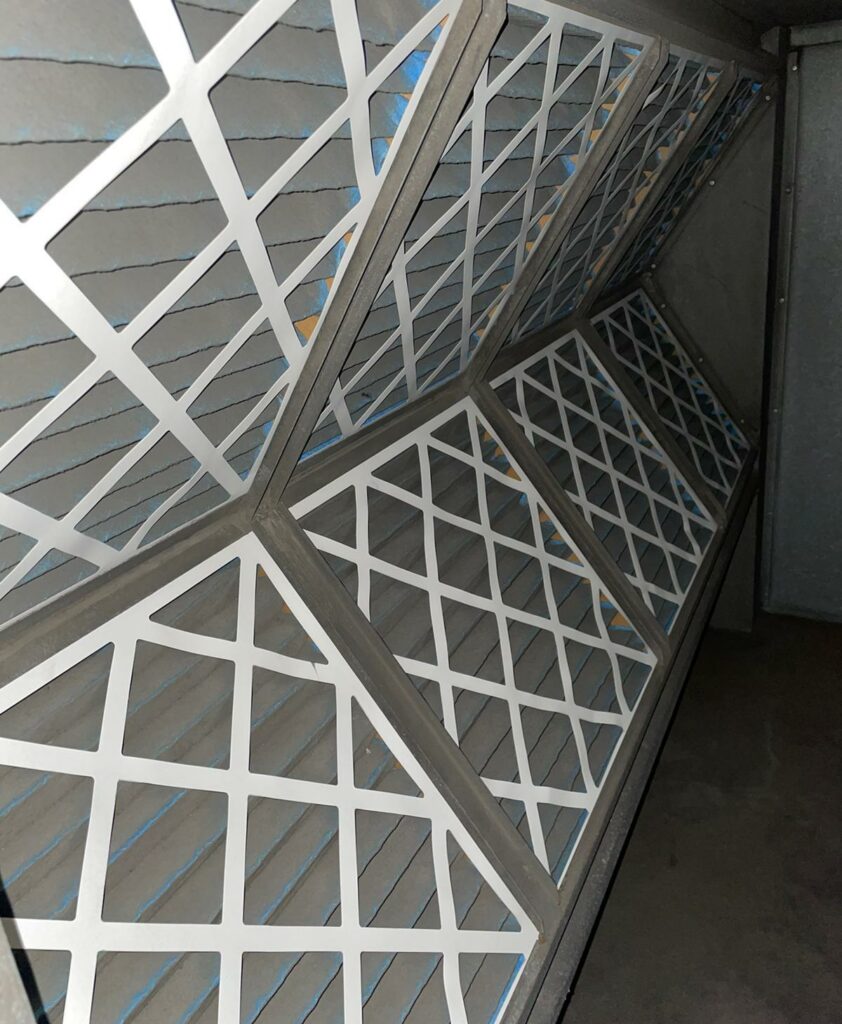
Ask your engineer to inspect each set of filters (sometimes called the filter bank) and note the gauge reading where one is fitted. Heavy use can leave filters dirtier than the calendar suggests.
- Confirm the right grade
Match each filter to the space it serves, rather than reordering out of habit or choosing a cheaper filter that meets the budget but not the specification.
- Plan extra checks around heavy use
Check during or after long periods of running, such as hot summers and cold winters, and replace filters when their condition says so. Arrange access out of hours where needed.
- Check the fit and the rest of the unit
Make sure filters are fitted the right way round with no gaps in the frame, and ask the engineer to look over the rest of the unit while it is open.
- Keep records
Filter grades, dates and gauge readings make the next decision easier and show the system is being maintained.
Set the next check date before the engineer leaves site, so the task does not slip
How PGS handles AHU filter maintenance
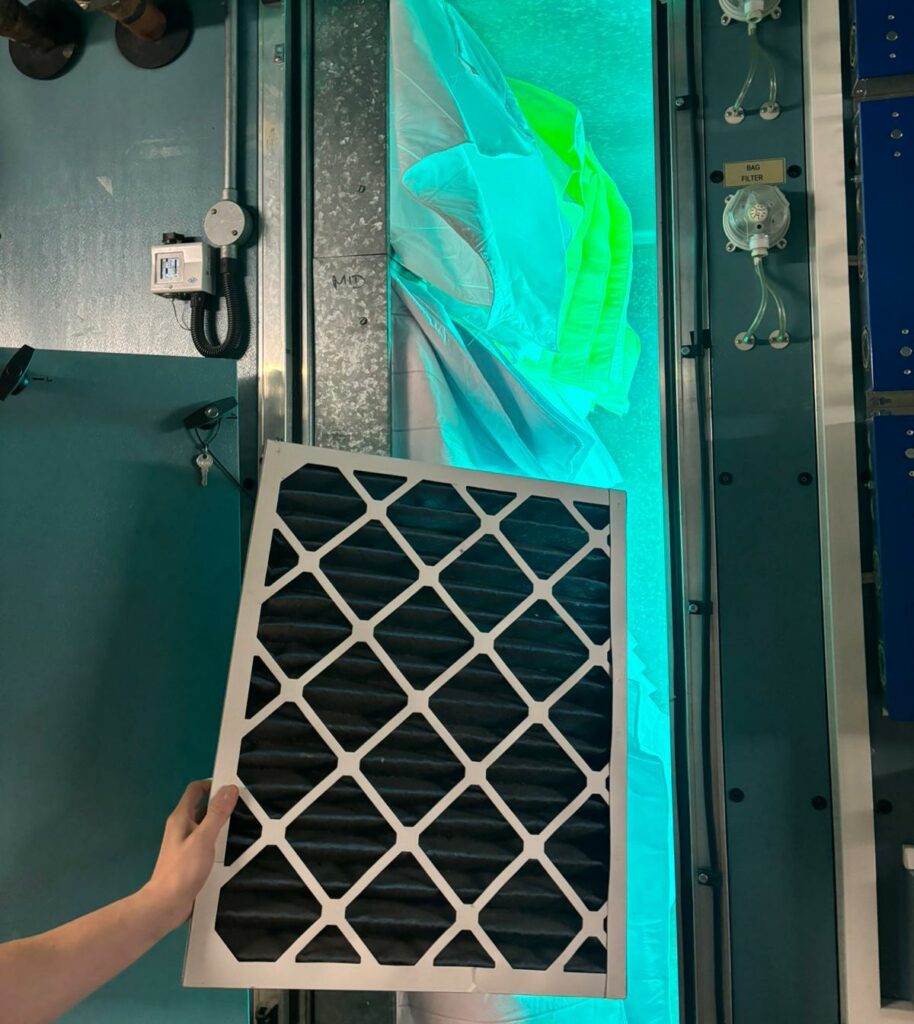
PGS has served commercial buildings for 15 years, and we provide commercial HVAC maintenance in Milton Keynes and across Buckinghamshire, Bedfordshire and Northamptonshire for offices, schools, warehouses and hotels.
Our approach to filters is straightforward: assess each environment individually, replace on condition, record everything, and look at the whole unit while it is open. Filter checks can sit within a planned preventative maintenance programme rather than being treated as one-off jobs, and every visit is documented with dates and readings.
We work across AHUs, VRF systems, chillers, rooftop units and commercial air conditioning. PGS is REFCOM F-Gas certified (REF1024497) and CHAS and Constructionline accredited, with 24/7 reactive call-out. More detail is on our HVAC services page.
You get one point of contact, a dated record of every visit, and plain-English advice on what your systems need, and what they do not.
Does your AHU filter need to be changed?
Get in touch with the PGS team today!