
If a room still feels chilly after the heating’s been on for a while, check whether the radiator is warming up evenly. Here are three common things to look for and what they could mean.
Cold at the Top, Warm at the Bottom?
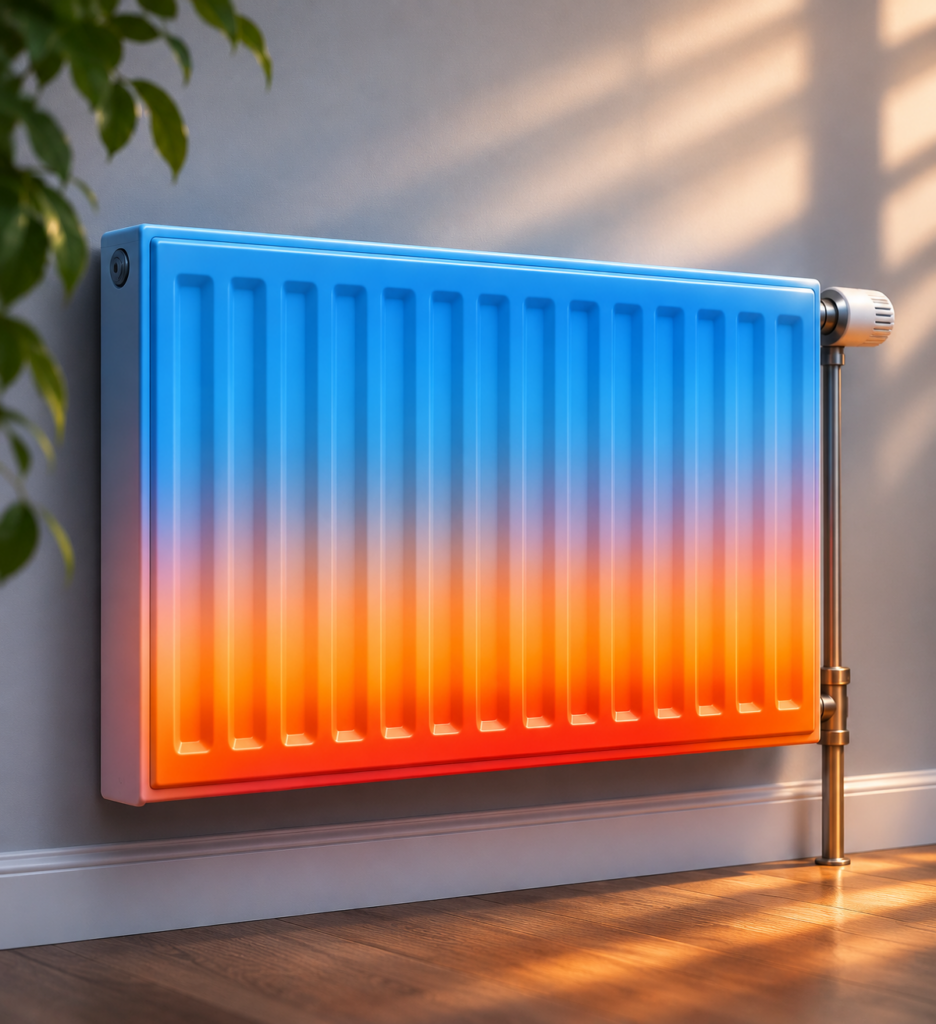
If your radiator feels warm towards the bottom but remains cold at the top, trapped air could be the culprit.
Air can accumulate inside radiators over time, preventing hot water from circulating throughout the entire radiator. This means you’re not getting the full heating output you should be.
The good news? This is often a relatively simple issue to resolve.
Bleeding your radiators releases trapped air, allowing hot water to circulate more effectively and helping your radiator heat up evenly again.
If you regularly find yourself needing to bleed your radiators, however, it could be worth having your heating system checked to identify why air keeps building up.
Warm at the Top, Cold at the Bottom?
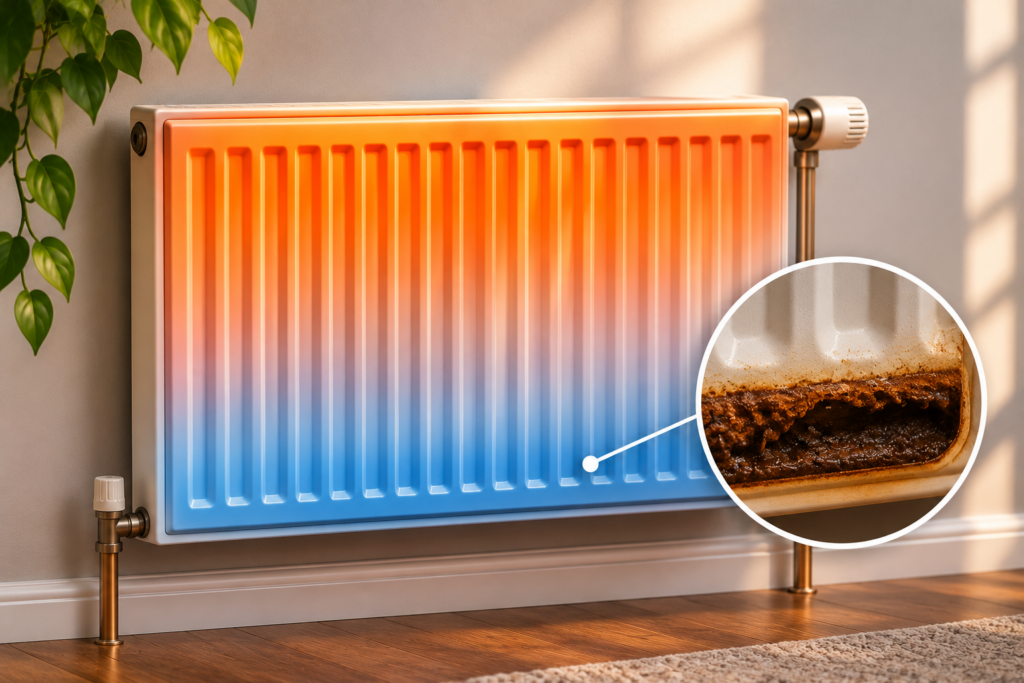
Have you noticed a patch at the bottom of your radiator that stays cold, even after the heating has been on for a while?
This could be a sign of sludge building up inside your heating system.
Over time, corrosion within your heating system can create deposits of rust and other debris. These deposits can settle at the bottom of radiators, restricting the flow of hot water and reducing their ability to heat your rooms effectively.
You might notice that your radiators take longer to warm up, certain rooms never feel quite warm enough or your heating system isn’t performing as well as it used to.
While sludge is one possible cause, it’s important to identify the underlying issue before deciding on the best solution.
Radiator Staying Completely Cold?
Have you switched on the heating, only to discover that one radiator is refusing to warm up?
If just one or two radiators are affected, the problem could be something as simple as a stuck or faulty radiator valve.
Radiator valves control the flow of hot water into individual radiators. When they’re not working correctly, they can prevent a radiator from heating up, even when the rest of your system is running normally.
However, if several radiators are struggling to heat up, there could be a wider issue affecting your heating system.
Sludge build-up, circulation problems or an incorrectly balanced system could all be contributing factors.
Rather than guessing what’s causing the problem, having your system professionally checked can help identify the issue and determine the most suitable solution.
Could Your Heating System Benefit from a Powerflush?
If your radiators are taking longer than usual to warm up, have persistent cold spots or aren’t providing the heat they once did, it might be time to investigate what’s happening inside your central heating system.
Over time, sludge and debris can build up within pipework and radiators, making it harder for hot water to circulate freely.
A powerflush uses specialist equipment to clean the system and remove accumulated deposits, helping to restore circulation and improve heating performance where sludge is the cause.
Some of the potential benefits include:
- Improved heat distribution throughout your radiators.
- Better circulation of hot water around your heating system.
- Reduced strain caused by restricted circulation.
- Improved heating efficiency where sludge build-up has been affecting performance.
While powerflushing removes existing deposits, appropriate water treatment and ongoing maintenance are important for helping protect your heating system against future corrosion and sludge build-up.
Not every cold radiator needs a powerflush, which is why identifying the underlying issue is important.
Our PGS engineers can investigate the problem and recommend the most appropriate next steps to help get your heating working as it should.
Want to find out more? Take a look at our Central Heating Powerflush services to see how we can help.
When Was Your Boiler Last Serviced?
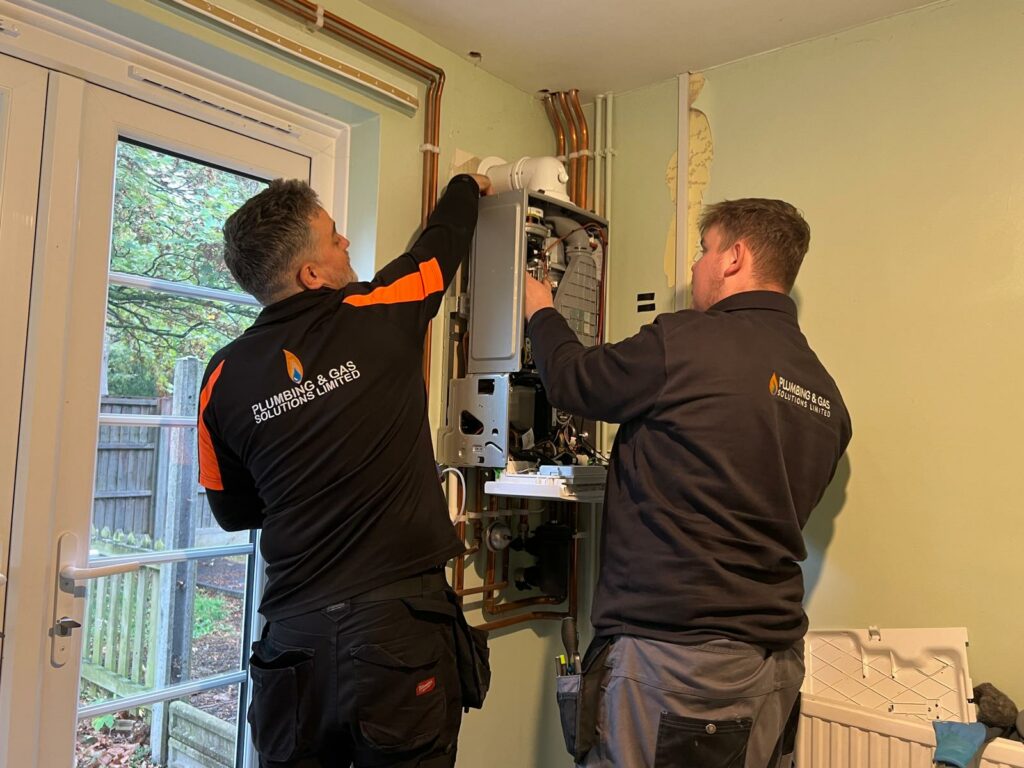
While you’re checking your radiators, it’s also worth thinking about when your boiler was last serviced.
Your boiler works hard throughout the colder months, and regular servicing is an important part of keeping your heating system safe, efficient and reliable.
An annual boiler service gives a qualified engineer the opportunity to check that your boiler is operating safely, inspect key components and identify signs of wear or potential problems before they develop into more serious issues.
At PGS, our qualified engineers provide professional boiler servicing for gas, LPG and oil boilers, helping homeowners keep their heating systems running reliably throughout the year.
Find out more about our Domestic Boiler Servicing services.
Don't Let a Chilly Room Turn into a Bigger Problem!
Whether it’s one radiator that refuses to heat up, persistent cold spots or several rooms struggling to reach a comfortable temperature, paying attention to your heating system could help prevent bigger problems later.
Sometimes the solution is straightforward, while other issues may require a little more investigation.
If you’ve got a radiator that stays cold or your heating isn’t performing as it should, get in touch with our friendly team at Plumbing & Gas Solutions. Our experienced engineers can investigate the problem, identify the cause and recommend the right solution to help get your home feeling warm and comfortable again.
Feeling the chill? Contact PGS today! 🔥
📞 01908 569031