
Frozen Pipes in Commercial Buildings: Winter Protection
To protect a commercial building from frozen pipes, you need to do four things before the first cold snap: insulate all exposed pipework, keep vulnerable areas above a minimum background temperature, know exactly where your stop valves are, and book a professional pre-winter plumbing inspection.
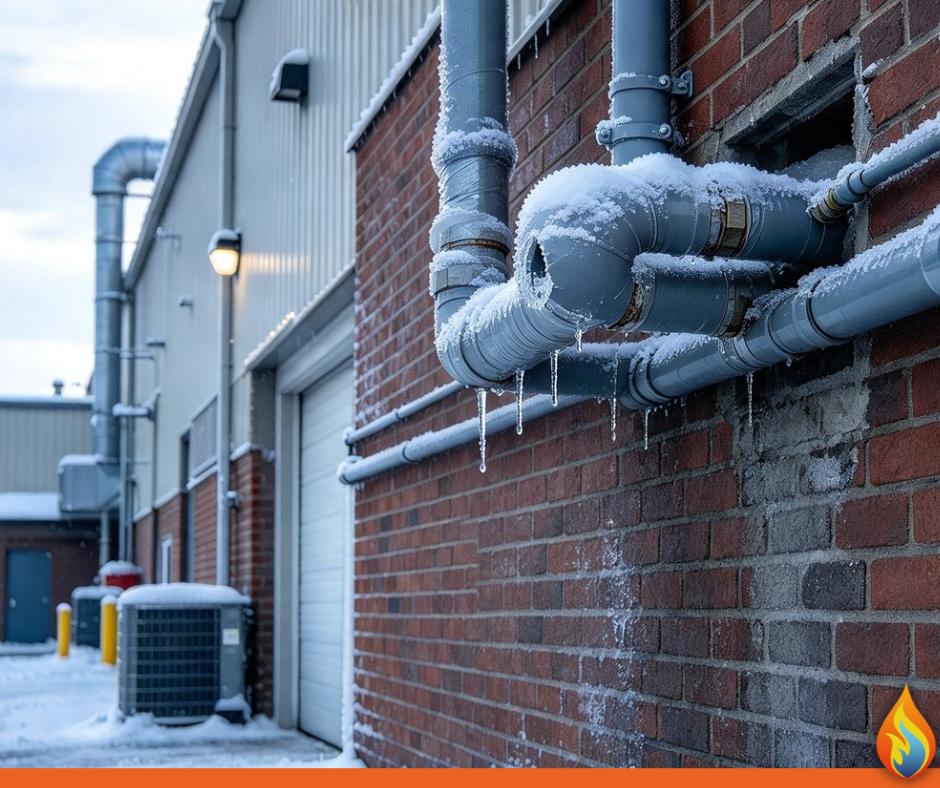
Frozen pipes in a commercial building rarely fail where you can see them. They fail in roof voids, loading bays, plant rooms and unheated storage areas, usually over a weekend when nobody is on site.
The UK Health Security Agency (UKHSA) Cold-Health Alert season opens on 1 November, and the first hard frost historically triggers a spike in burst-pipe call-outs across Milton Keynes. The buildings that get through winter undamaged are the ones where somebody acted in November, not the ones where somebody reacted in January. This guide sets out exactly what that action looks like.
Who this is for
This guide is written for the people responsible when a pipe lets go: facilities managers looking after office blocks, industrial estates and retail parks, office managers who carry building responsibility alongside everything else, and operations managers running warehouses and retail premises.
You manage the maintenance budget, you appoint the contractors, and you take the call at 6am on a Monday when the ground floor is under water. If your estate sits within 30 miles of Milton Keynes and you answer to a director who expects buildings to simply work, this is for you.
The real cost of a burst pipe is the week after
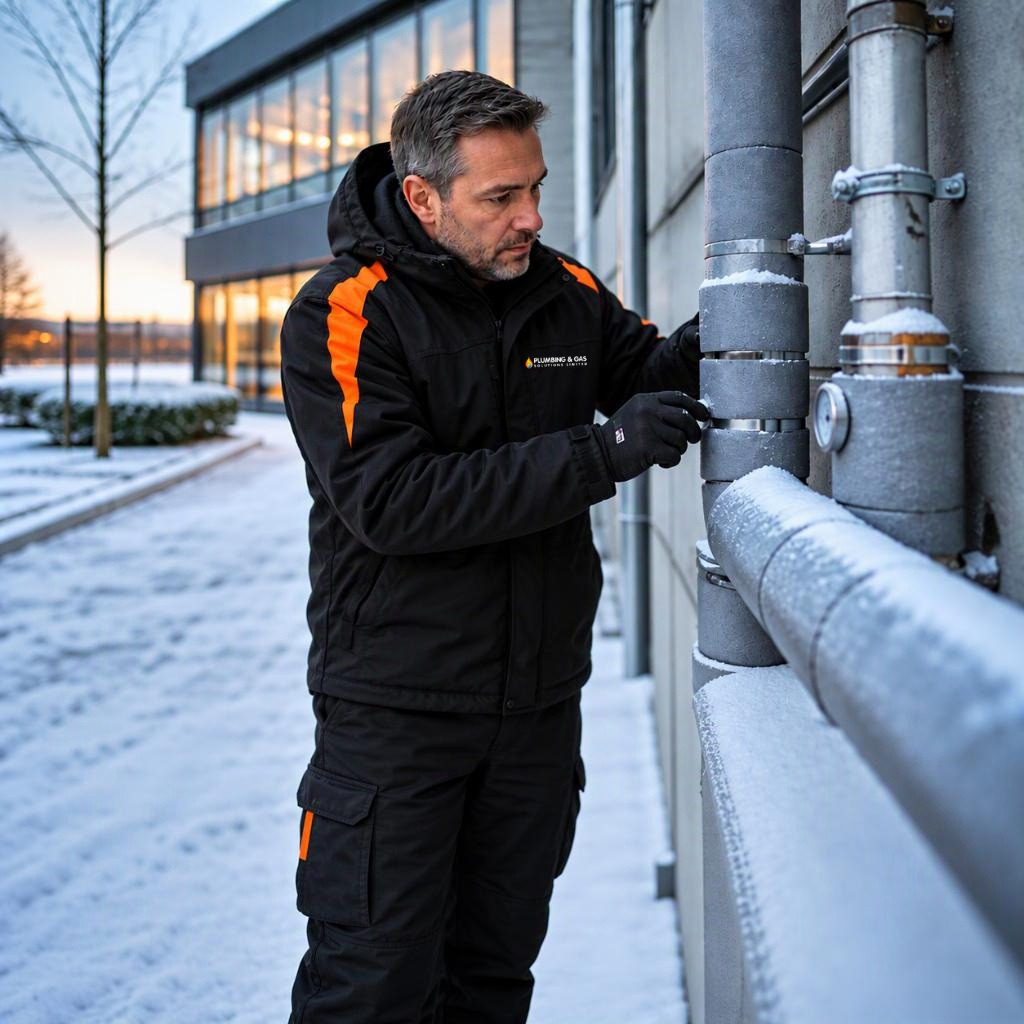
A burst pipe at business premises is never just a plumbing job. It is closed trading floors, ruined stock, tenants demanding answers and an escape of water claim, the insurance term for damage caused by water leaking from your own pipework or appliances.
The scale is easy to underestimate. UK insurers paid out £987 million in escape of water claims in 2022, around £2.7 million a day, and Zurich’s major loss team reports commercial claims that run to seven figures. Those figures exclude loss of rent, business disruption and anything below your excess.
Facilities managers tell us the worst part is not the water, it is the aftermath: chasing a contractor who will not pick up, explaining the downtime to senior management, and knowing the whole thing was preventable.
That is why the clients who stay with us talk about reaction as much as workmanship (read what they say).
Do not wait for the first frost to find your weak point. Book a pre-winter plumbing check with our commercial team on 01908 569031, email [email protected] or use our contact form, and we will inspect your building before the cold does.
Preventing frozen pipes in a commercial building starts before the frost
Prevention is a planned exercise, not an emergency response. At Plumbing & Gas Solutions, our pre-winter checks are built on a simple principle: find the vulnerability in November so you never meet it in January.
Here is the plan. An experienced engineer walks your building and identifies every pipe run at risk, including the ones in voids and ducts that never appear on a casual walkround. We check insulation condition, test stop valves that may not have been turned in years, inspect external taps and condensate pipes, and confirm your frost protection settings are actually doing their job.
This is where over 120 years of combined engineering experience earns its keep. A generalist might lag the obvious pipes. Our engineers know that commercial buildings fail at the dead legs, the redundant pipe sections still holding water, and at the points where heating zones end but pipework continues.
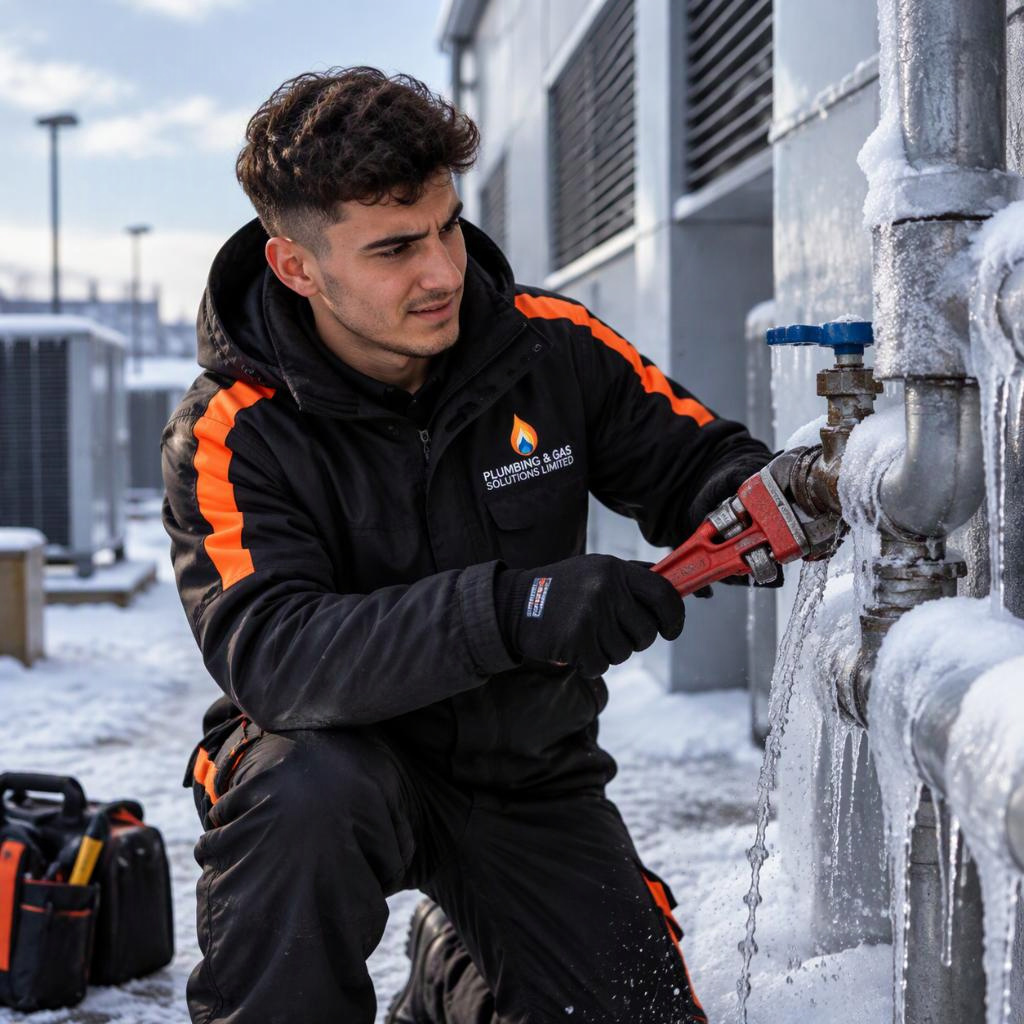
We see it every winter. On one call-out, inadequate lagging had left a run of pipework exposed, the water inside froze and expanded, and what began as an insulation oversight became a plumbing failure that restricted the flow and damaged the pipe. Our engineers attended, dealt with the frozen section and replaced the affected pipework to get the system back in order. A lagging check in the autumn would have avoided the whole thing.
You get a written report of what we found and what we recommend, so the work can be planned on your terms rather than forced on you by the weather. A permanent fix, not a temporary patch, starts here.
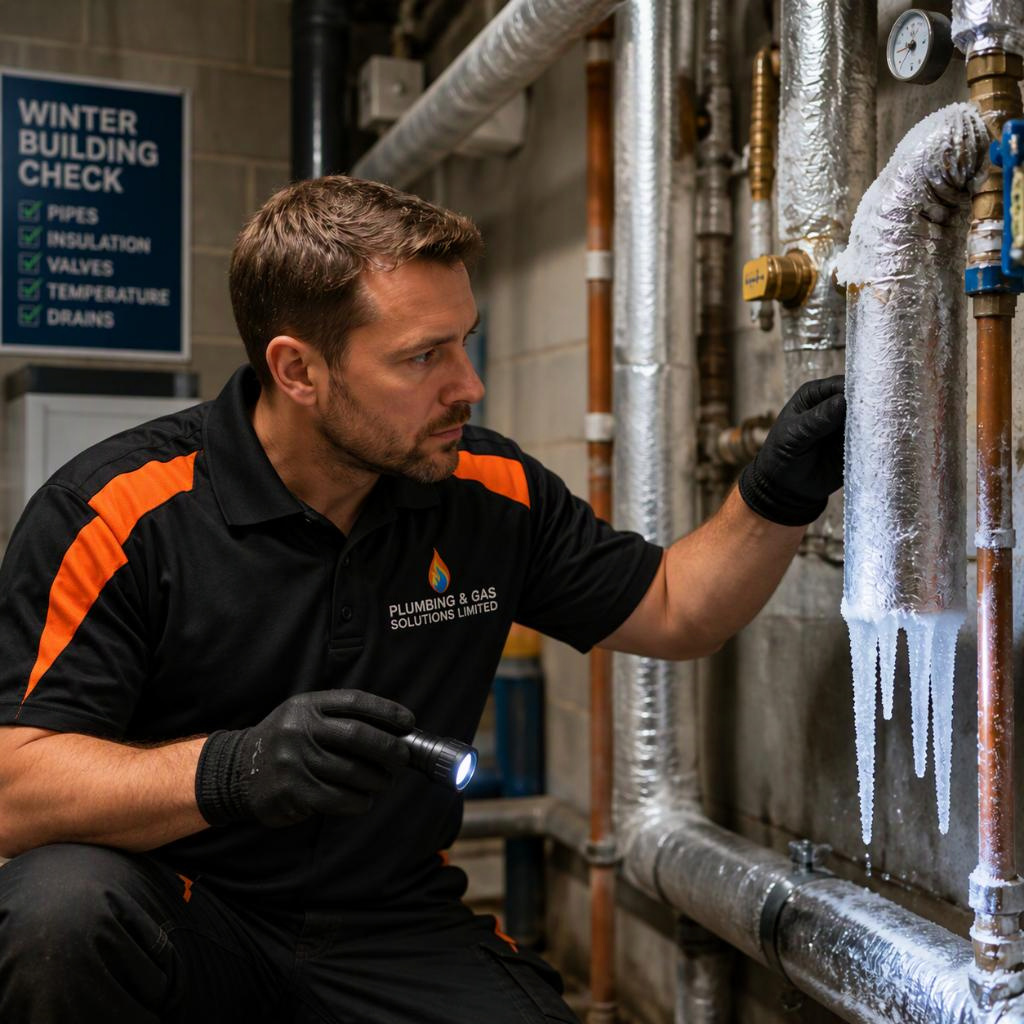
Commercial pipe insulation: where buildings actually lose the battle
Commercial pipe insulation fails quietly, long before the pipe does. Lagging gets knocked off by other trades, compressed behind racking, soaked by minor leaks or simply never fitted to pipework added during a refit.
Warehouses and retail units are especially exposed. Large roller doors drop internal temperatures fast, and pipes running along external walls or through unheated mezzanines freeze first.
For high-risk runs, insulation alone may not be enough. Trace heating, a low-power electric element fitted along the pipe that keeps it just above freezing, is a sensible investment for sprinkler feeds, external supplies and plant rooms. It costs a fraction of one escape of water claim.
Step by step: your pre-winter pipe protection routine
- Locate and test every stop valve. Find the main stopcock and all zone isolation valves, turn each one fully off and on to confirm it works, and label them clearly so any staff member can isolate the supply in an emergency.
- Walk the whole building, including the spaces nobody visits. Check roof voids, risers, plant rooms, loading bays and external pipework for missing, damaged or wet insulation, and replace anything that is not intact.
- Set minimum temperatures for the holidays. Keep vulnerable areas at a background temperature of at least 7 degrees Celsius during shutdowns, and confirm frost thermostats on boilers and heating systems are working, not just fitted.
- Isolate and drain what you do not need. External taps, redundant pipe runs and seasonal systems should be shut off and drained down before December.
- Create a written emergency plan. Record valve locations, your emergency plumber’s number and out-of-hours contacts, and brief keyholders so the first person on site knows exactly what to do.
- Book a professional inspection. An engineer will catch the risks that a visual walkround misses, from failing valves to unprotected dead legs. If you already have a planned preventative maintenance contract, ask for the winter check to be added to it.
What to watch out for
Quick checklist
- The Christmas shutdown. Most commercial bursts happen when buildings sit empty with the heating off. A pipe can freeze, thaw and flood for days before anyone returns.
- Pipework added during refits. New runs installed by shopfitters or other trades are frequently left unlagged and uninspected.
- Stop valves that have seized. A valve that has not been turned in five years often will not turn when you need it most.
- Condensate pipes on condensing boilers. These external plastic pipes freeze readily and shut the boiler down, removing your frost protection exactly when you need it. If that happens mid-shutdown, our emergency temporary heating and hot water service keeps the building above freezing while the fault is fixed.
- Assuming your incumbent contractor has it covered. If they have never mentioned winter preparation, they have not done it.
- Label the main stopcock and all isolation valves this week.
- Test every valve by turning it fully off and on.
- Inspect insulation on all exposed pipework and replace damaged lagging.
- Set frost protection and a 7-degree minimum for unoccupied periods.
- Drain down external taps and redundant pipe runs.
- Lag the boiler condensate pipe or reroute it internally.
- Add your emergency plumber’s number to the keyholder pack.
- Book a pre-winter plumbing inspection before the first cold snap.
FAQs
Q: At what temperature do pipes freeze in a commercial building?
A: Water pipes can begin to freeze when the surrounding air drops below 0 degrees Celsius, but sustained temperatures of minus 2 or lower pose the real risk, especially for pipes in unheated or draughty spaces. Keeping vulnerable areas at a background temperature of at least 7 degrees during shutdowns gives you a reliable safety margin.
Q: What should I do first if a pipe bursts at my business premises?
A: Turn off the water at the main stopcock immediately, then switch off electrics in any affected area if it is safe to do so. Open taps to drain the remaining water from the system, photograph the damage for your insurer, and call an emergency commercial plumber. Knowing your valve locations in advance turns a flood into a puddle.
Q: Will my insurance cover a burst pipe, and what is an escape of water claim?
A: An escape of water claim covers damage caused by water leaking from your own pipework, tanks or appliances, and most commercial property policies include it. However, insurers increasingly expect evidence of reasonable precautions, such as maintained heating during unoccupied periods and adequate pipe insulation, and may reduce or decline claims where none exist.
Q: How quickly can an emergency commercial plumber in Milton Keynes reach my site?
A: Plumbing & Gas Solutions runs a large, locally based team of engineers covering a 30-mile radius of Milton Keynes, so we can dispatch quickly rather than leaving you waiting on a subcontractor. Contract customers receive priority response, and you’ll be updated at every stage from call to completion.
Q: Is a pre-winter plumbing check worth it?
A: Yes. A single commercial escape of water claim can run into tens of thousands of pounds before you count lost trading, tenant complaints and excess payments, and the largest run to seven figures. An inspection also gives you documented evidence of due diligence for your insurer, which matters more every year.
Right now, in early November, you have a choice that your January self will thank or curse you for. The forecast will turn, the first hard frost will arrive, and every unlagged pipe and seized valve in your building will either have been dealt with or be waiting for you.
You already know where the cold spots in your estate are. The only question is whether you act on that knowledge this month or explain it to a director after the flood. The permanent fix starts with a single inspection.
Get your building winter-ready before the cold arrives. Call Plumbing & Gas Solutions on 01908 569031, email [email protected] or book online to arrange your pre-winter plumbing check. One visit, a clear written report, and consider it sorted.